

At 2am, a woman walked into the emergency ward bleeding before her baby was born. She had a rare blood group, the hospital had one unit, and she needed about five.
For the next seven hours, Dr Mary Maina, an obstetrician in Kiambu County, and her colleagues telephoned anyone who might help find blood. The second pint did not arrive until 9am. The woman survived, but none of the team had slept.
Dr Maina told that story at the Kenya Editors Guild (KEG) forum on maternal, newborn and child health at The Serena Hotel in Nairobi on Thursday, to make a point to the journalists in the room. When a mother or baby dies, she said, the frontline health worker is often blamed without anyone asking about the system behind them. Her plea, that reporters look at that system before they assign fault, echoed through a day of discussion under the theme “Beyond the pilot: Making quality care work in every county”.
The forum began with a story many Kenyans will remember, that of Mercy Kanini, the Juja mother whose five premature babies died in September. KEG President Zubeda Kananu said such tragedies raise lasting questions about high-risk pregnancies, specialised newborn care and referral systems, and asked editors whether those questions survive once the headlines fade.
Prevention, quietly doing its work
Dr Hellen Barsosio, a research scientist at the Kenya Medical Research Institute (KEMRI) Centre for Global Health Research and MIRNA lead for Kenya, told editors that Kenyan science has shaped much of the global evidence on keeping mothers and babies safe.
“The gap truly isn’t knowledge. We know the tools. We produce the research in Kenya. The true gap is delivery,” she said. Proven interventions, she explained, are either failing to reach all women or reaching them too late.
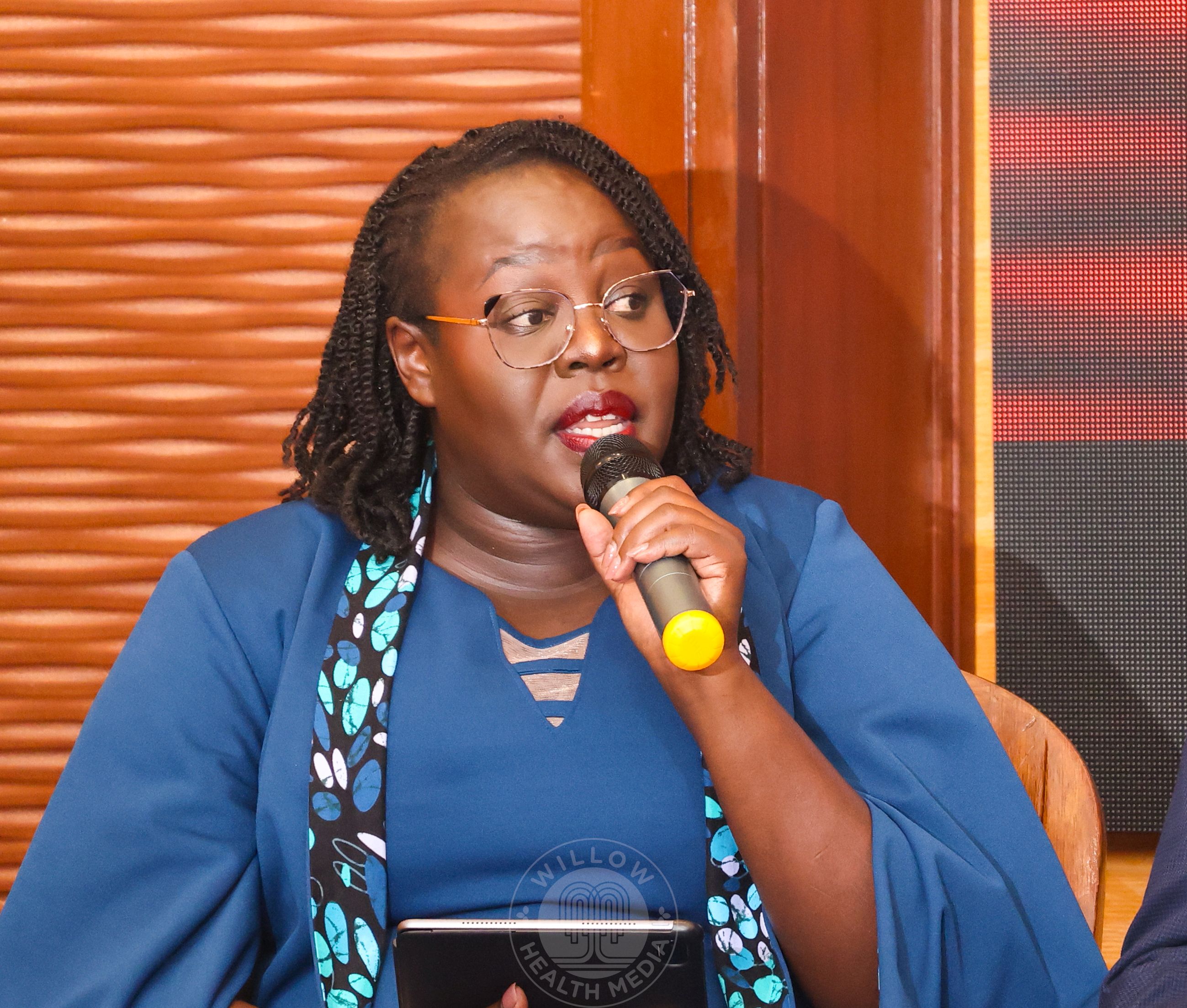
Dr Barsosio described antenatal care as a bundle of protections. A woman attending clinic may receive malaria prevention, a tetanus vaccine, a bednet in endemic areas, health education and medicines to prevent anaemia. Prevention, she said, protects two lives at once.
Kenya has recorded a 34 per cent reduction in malaria cases among pregnant women and babies, and the country was declared free of maternal and neonatal tetanus in 2019 because mothers are vaccinated in every pregnancy. “Prevention is often very quiet. It’s not sexy, it will not appear on a headline. It’s quiet, but it works,” she said.
Researchers are working on maternal vaccines that could be given from early to late pregnancy, so that babies are born with antibodies against early neonatal sepsis, one of the biggest killers of young infants. Pneumonia, she noted, remains the biggest killer of the youngest children, and maternal immunisation is expected to play a growing role in preventing it.
Dr Barsosio linked prevention to the health system that delivers it. Policies are set nationally, but counties must carry them out, she said, which means a larger national health budget, more providers and about 5,000 additional midwives. A trained midwife, she said, makes a different outcome from a person with no obstetric training attending a delivery. She closed with a request to the room. “Prevention, prevention, prevention to everybody,” she said, urging editors to tell mothers to start antenatal care early, to sleep under a net and to take their vaccines and iron.
The Principal Secretary’s brief to the press
According to Dr Ouma Oluga, the Principal Secretary for Medical Services at the Ministry of Health, the ministry’s own Every Woman, Every Newborn, Everywhere (EWENE) dashboard shows 15 mothers and 92 newborns dying from preventable complications of pregnancy and childbirth.
He urged journalists to ground their accountability work in the law, citing Article 43 of the Constitution and the four health laws passed in 2023: the Social Health Insurance Act, the Primary Healthcare Act, the Digital Health Act and the Facility Improvement Financing Act.
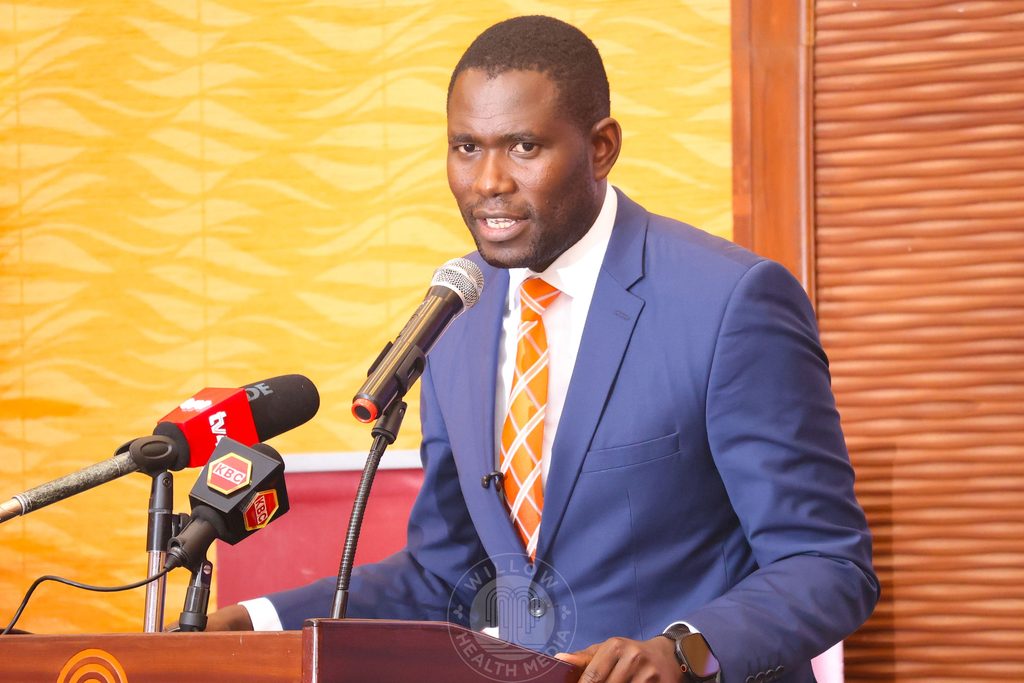
“Without law, it is very difficult to find an enforcement tool,” he said. “When you want to produce accountability even as media, you have to reference it based on what the law says.”
He defended the numbers behind the reforms. With 33.7 million Kenyans registered with the Social Health Authority (SHA), he said, the government has costed primary healthcare at Sh900 per person, which implies a requirement of about Sh31 billion. Sh19.1 billion has been budgeted so far, and the ministry hopes to reach around Sh27 billion. “Budgets don’t come from emotions. They come from evidence,” he said.
Currently, attendance of at least four antenatal visits stands at 58 per cent nationally, against a target of 90 per cent, and only 8 per cent of mothers attend the eight visits the Ministry of Health recommends. Skilled birth attendance is higher, at about 89 per cent, or 91 per cent in the latest data. The more troubling finding came from a national quality assessment. “Only 37 per cent of all our hospitals have all the seven emergency obstetric functions,” he said.
What happens inside the hospital, he argued, often begins outside it. A mother who skips early antenatal care may arrive with a blood level of seven, and “when they lose 500 millilitres or one litre of blood, they are gasping”. He also described new standards for checking mothers within 48 hours of delivery, now written into the SHA contract with facilities, and a push to follow women through the whole postpartum period to prevent sepsis.
A request, and a challenge on theatres
Dr Oluga then made a direct ask of newsrooms. “You do not have to wait for the Ministry of Health to give you a budget to run a campaign,” he said, urging stations to carry one minute of antenatal messaging every day as a form of media corporate social responsibility. “It will speak louder than the headlines.”
The PS noted that the government has delivered comprehensive obstetric equipment to 635 facilities and is running a National Equipment Service Programme, under which facilities receive items such as theatres, neonatal units and MRI machines from vendors and pay for them through SHA only when they are used, with no county budget required. Some public hospitals have been slow to adopt the model, he said, because they fear losing revenue.
His example was a hospital in the North Rift that refers between 18 and 27 patients to Moi Teaching and Referral Hospital for MRI scans every day while waiting for county funds to buy its own machine. Under the national programme, he said, a scan costs the system about Sh11,000, compared with Sh18,000 to Sh30,000 in the private sector.
The same logic, he argued, applies to maternal referrals. “Referral for ICU, I am okay. Referral for theatre, no way,” he said. Mothers are largely referred for caesarean sections, so the first question after a death should be why that facility had no theatre. “We no longer want generalities in healthcare. We want specifics,” he said.
Dr Mercy Korir, the CEO and Editor-In-Chief, Willow Health Media, moderated the closing panel, which is where Dr Maina’s night shift came into focus. Dr Korir opened by testing the room on the same dashboard Dr Oluga had described.

“As a media, we should have all the numbers, all the tools for us to hold people accountable,” she told editors, inviting them to open the EWENE dashboard on their phones. The platform, she said, updates every minute, logs each death and lets users drill down to a county and a facility. A journalist who finds that a death was logged in a county that claims none can go to the family and ask what happened before the hospital and inside it.
“It’s not an event, but there’s a story,” she said. “We are moving from an individual story to a systems conversation.”
Dr Maina, who chairs the Inter-County Maternal and Perinatal Death Surveillance and Response (MPDSR) committee, explained that the process is meant to be “no blame, no shame”. She used the Swiss cheese model to show how a maternal death results from a chain of small failures, such as an overworked nurse missing a high blood pressure reading and a ward short of staff to monitor vital signs every four hours. Kiambu used its MPDSR data to deploy gynaecologists across seven level four facilities, she said, and has recorded just one public-sector death from postpartum haemorrhage this year, down from 15 to 20 in a typical year.
Prof Francis Wafula of Strathmore Business School warned that county wage bills, uneven staffing and a tired workforce are limiting what the system can achieve. A survey of more than 10,000 health workers found high emotional exhaustion among nurses and detachment among doctors, he said, and those results will be shared next month. Dr Matiko Riro of Savannah Global Health Institute called for one plan, one budget and one monitoring framework across national and county governments, so that partners stop duplicating effort for the same mother. Dr David Mukanga of the Gates Foundation stressed that a medicine not registered and quality assured by the regulator is only “a promise”, not an intervention.
Dr Korir closed the discussion with a challenge to her own profession. The health system’s building blocks, she suggested, should include a seventh: “media for accountability and follow up”. She then brought the debate back to the people at its centre. “That mother could be anyone of us in this room, our sister, our daughters, so we should all be responsible for it,” she said.