

When South Africa introduced its pneumococcal and rotavirus vaccines, the decisions came quickly and the groundwork lagged behind. Health workers on the ground had little information, and the Road to Health card booklet had no space to record the new vaccines.
Professor Michelle Groome has carried that lesson into her work on maternal immunisation, and it now shapes how she thinks about the vaccines still on their way.
A career spent watching vaccines perform
Professor Groome has worked in vaccine science for more than twenty years, first as a clinical trialist and then as an epidemiologist tracking how vaccines perform once they leave the laboratory and reach real populations. A medical doctor with a PhD from the University of the Witwatersrand, she is Principal Researcher at the Vaccines and Infectious Diseases Analytics (VIDA) Research Unit at Wits, where she leads programmes on maternal immunisation, antimicrobial resistance and diarrhoeal disease. She also holds a joint appointment as Reader in the university’s Faculty of Health Sciences.
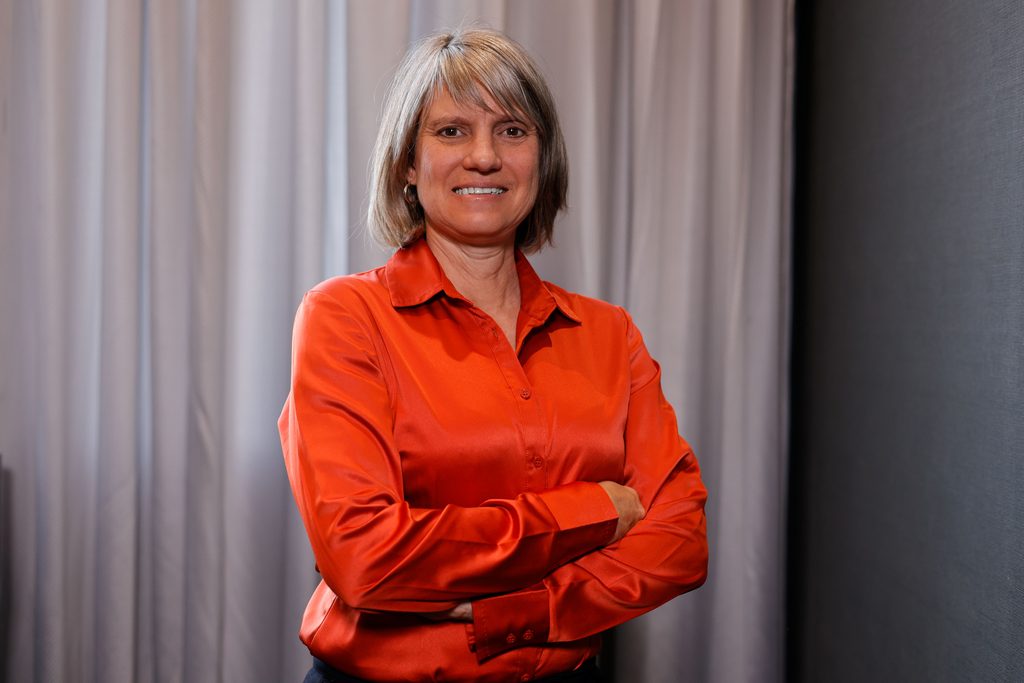
Communicable Diseases (NICD) in South Africa.
Her earlier work on rotavirus vaccines helped build South Africa’s reputation for rigorous, real-world evidence on vaccine impact. She has more than a hundred peer-reviewed publications, a National Research Foundation B2 rating and the Fogarty International Center’s Emerging Global Leader Award.
That mix of trial methodology and population-level surveillance informs her view of what the Maternal Immunisation Readiness Network in Africa and Asia (MIRNA) has achieved. Her answer is a structural one: a working network of trust between researchers, governments and global institutions, built years before the vaccines reach the countries involved.
A network that builds capacity
“Creating a strong collaborative network between researchers, policymakers, programme implementers and public health experts across Africa and Asia has really been important,” she said. “This has helped to elevate maternal immunisation as a critical component of maternal and child health in these continents.”
The network has done more than bring people into the same room. “It has also strengthened research capacity across the different groups. There’s been peer-to-peer learning and sharing of experiences across the countries, which has been really helpful in terms of strengthening maternal immunisation.”
The practical result is evidence aimed at the people who must act on it. “We’ve also been able to generate country-level data, which is really critical to inform policymakers who are making the decisions on introducing new maternal vaccines.”
Researchers and governments, side by side
Professor Groome stressed that the network’s strength lies in pairing researchers with the institutions that hold decision-making power. “We’ve fostered really strong partnerships between researchers as well as governments. Within countries, the researchers have been working hand-in-hand with governments.”
That cooperation reaches upward to the bodies that shape global immunisation policy. “We’ve also worked very closely with global organisations such as WHO and Gavi, with members of these organisations as part of our technical advisory committee.” Professional societies have joined too. “We’ve also worked very closely together with professional societies, obstetric societies like FIGO, as well as midwives, the International Confederation of Midwives.”
Bringing an advocacy voice to the table
One addition stands out for her: placing an advocacy voice inside technical discussions that might otherwise stay with researchers and officials. “What’s really been important is bringing MAMA to the table in terms of discussions on maternal immunisation at a global level. I think this has really been one of the key successes.”
RSV vaccines are already in use in high-income countries, and rollout in low- and middle-income countries is expected within the next few years. Professor Groome sees advocacy as the way to keep that window from being wasted. “It’s really been able to highlight to policymakers the impact that maternal immunisation can have on protecting moms and their babies, and how that can then translate into reduction in burden of disease and illness in this very vulnerable age group.”
The evidence is also built to travel. “We’re also generating data from a diverse range of settings. We purposely included diverse countries within the network, and so we’ll be able to generate evidence across a diversity of settings. This will help other countries when they come to considering introduction of these new maternal vaccines.”
The case for starting early
Her sharpest argument is about timing, and it comes from South Africa’s own history. “The decisions were made very quickly, and on the ground the implementers really didn’t have a lot of information on the introduction of these new vaccines. There wasn’t a place in the Road to Health card booklet to record these new vaccines.”
The detail is small, but the consequence is clear, and it has become a guiding principle for how MIRNA approaches RSV. “We’re encouraging countries to proactively think about maternal immunisation introduction way before the vaccines are actually available or registered in the countries.”
She was specific about what that groundwork covers. “It’s really important that we’re thinking about the implementation, vaccine demand, how to categorise burden, all before these vaccines have actually been available. And this is the work that we’ve been doing over the last two and a half years.”
Partnership as the foundation
Her closing assessment returns to where she began. “MIRNA has also been able to show successful partnerships between researchers and governments and organisations, and I think this has really been useful in terms of promoting the maternal immunisation agenda.”
The lesson she draws from South Africa’s past and MIRNA’s present is the same. A vaccine can have a strong technical case, yet it achieves little if the systems, the paperwork and the people meant to deliver it are still catching up when it arrives. MIRNA’s task, as she frames it, is to make sure that catching up happens in advance.