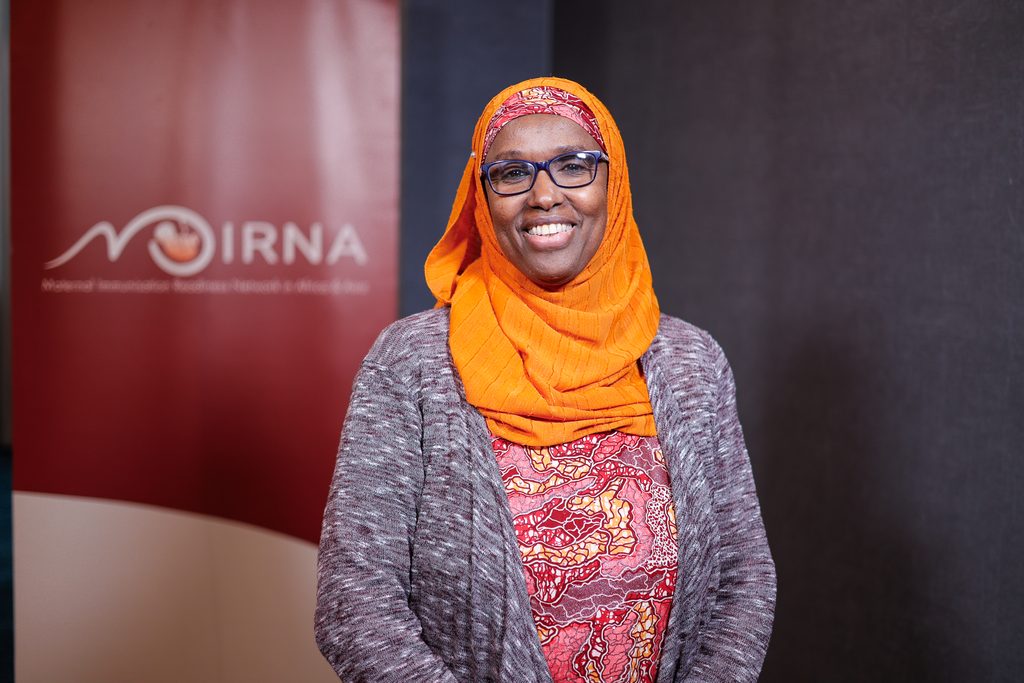
Professor Hadiza Galadanci was the first female obstetrician trained in Nigeria’s Kano region, and she has spent close to four decades combining frontline clinical work with research that has shaped policy across West Africa.
She holds an MBBS from Ahmadu Bello University, a Master’s in Reproductive and Sexual Health Research from University College London, and fellowships of the West African College of Surgeons and the Royal College of Obstetricians and Gynaecologists in the United Kingdom. She has led the Nigerian arm of the Maternal Immunisation Readiness Network in Africa and Asia (MIRNA), and TIME magazine named her among the 100 most influential people in health in 2024.
Decades spent delivering babies alongside decades spent shaping the policies that decide whether those babies survive give her view of Nigeria’s neonatal mortality crisis its weight.
A decade of stalled progress
Professor Galadanci begins with the numbers. “Nigeria contributes a lot in terms of neonatal mortality,” she said. “Sometimes they say 41 per 1,000, sometimes 51 per 1,000.” What troubles her is how little the figure shifts. “Within the last almost a decade, we have not improved our neonatal mortality enough in Nigeria.”
The latest national survey supports her and a glance at the 2023-24 Nigeria Demographic and Health Survey puts neonatal mortality at 41 deaths per 1,000 live births, roughly one infant in 25 dying within the first month of life. That is almost unchanged from 39 per 1,000 five years earlier, even as under-five mortality fell from 132 to 110. The rate stood at 48 in the 2003 survey, so two decades have delivered a fall of seven points.
Kano, where Professor Galadanci trained, recorded the highest state neonatal mortality rate in the survey, at 59 per 1,000. Federal health officials accept the problem. The Ministry says 40 to 45 per cent of under-five deaths occur in the neonatal period, and has pointed to its Maternal and Neonatal Mortality Reduction Initiative and the Nigeria Child Survival Action Plan 2025 to 2029 as its response.
The causes, Professor Galadanci said, are well known. “The common causes of neonatal death are prematurity and then infections. One of the infections is lower respiratory tract infection, and RSV, respiratory syncytial virus, causes a lot of those.”
A vaccine within reach
Unlike prematurity, RSV now has a preventive tool. “Now we have a vaccine that you can give the mother. And if you give that mother that vaccine, then she is going to protect the baby.”
The science behind her optimism is recent because the vaccine, Abrysvo, is given as a single dose between 32 and 36 weeks of pregnancy, and the mother’s antibodies cross the placenta to protect the infant during the first six months of life. The World Health Organization has prequalified it, and that status lets Gavi and UNICEF procure it for eligible low- and lower-middle-income countries, where it had not previously been used. A recent review of randomised and real-world studies found substantial protection against infant RSV disease.
In her view, nothing matters more for preventing neonatal deaths than tackling RSV, and maternal immunisation can do it.
What MIRNA asks of a country
Professor Galadanci describes Maternal Immunisation Readiness Network in Africa and Asia (MIRNA)’s work as a sequence of questions that any country must answer before a new vaccine enters its schedule.
The first is burden. “Is the vaccine really addressing a disease that is of high burden? So we need to know what is the burden of RSV infection. And we have that from our maternal consortium work.” That evidence, drawn from MIRNA’s member countries, shows RSV to be a genuine driver of infant death and gives Nigeria’s National Immunisation Technical Advisory Group (NITAG) grounds to act.
The second is readiness. “Our readiness starts from policy. Do we have policies in place that can allow this vaccine to be introduced? Do we have funding for it? Do we have monitoring and evaluation for it? Do we have community awareness about it?” Every answer, she stressed, has to be found before rollout, not afterwards.
The third is cost. “What is the amount of money you need to introduce this vaccine, and is it really cost-effective? Because you can introduce a lot of money and at the end of the day it’s not cost-effective.”
Safety monitoring belongs in the same review. Another maternal RSV candidate, from GSK, was not taken forward after an imbalance in preterm births ended its trial early. Researchers have since modelled the possible trade-offs of preterm birth risk against deaths averted for Abrysvo in South Africa. Professor Galadanci did not raise this in her interview, but it shows why her insistence on monitoring and evaluation is more than a formality.
Carrying everyone along
No introduction succeeds on epidemiology and economics alone. “Who are the stakeholders? You need to make sure that you carry along all the right stakeholders, because if you miss any stakeholder, then you are in trouble.”
Her list reaches well beyond health officials. “The stakeholders are professional bodies, healthcare workers, policymakers, religious leaders, women’s groups. Even the patients, even parents of survivors, parents of babies that have been lost from RSV.”
Demand cannot be assumed once supply exists. “You can have the vaccine and then nobody comes to take it. So you need to know from the aspect of the women themselves, are they really ready to take this vaccine?”
The fix she returns to most forcefully is integration. In Nigeria, as in much of MIRNA’s membership, antenatal care and routine immunisation run on separate tracks. “Maternal care is usually given in an antenatal clinic, and then immunisation is given in what we call the expanded programme of immunisation. And these are two different programmes. Now we need to bring these programmes together.”
She sees this as the precondition for the vaccine reaching mothers at all. “In the antenatal clinic you can have vaccines as well, and whatever you need to do in EPI, you’re able to do it in the antenatal in terms of data collection and so on. So there must be integration, from the highest level of policy to integration at the level of service delivery.”
Professor Galadanci’s argument is that no baby should die of a preventable infection when a maternal vaccine exists. What distinguishes her account is its practicality. Burden, readiness, cost-effectiveness, stakeholders, demand and integration form a working list, and she can say which items Nigeria still has to tick off.
The national survey shows a rate of 41 per 1,000, that has held steady while child mortality overall has improved, and Kano’s 59 shows where the pressure is greatest. A vaccine alone will not close that gap, but a country that answers her questions honestly could make sure it is used well.