

Bangladesh’s health gains have plateaued. Here is what Dr Shams El Arifeen says must change.
Few figures in South Asian public health carry as much institutional memory as Dr Shams El Arifeen.
He was the first Senior Director of the Maternal and Child Health Division at icddr,b in Dhaka, and is a professor of epidemiology at the James P. Grant School of Public Health at BRAC University.
Over more than three decades he has studied, and helped shape, how Bangladesh keeps its mothers and children alive. He holds an MBBS from Dhaka Medical College, plus a Master of Public Health and a Doctorate in Public Health from Johns Hopkins University. He has published more than 300 peer-reviewed papers, and his work has repeatedly fed into national policy through his roles on bodies such as the National Committee on Immunization Practices and the Bangladesh Maternal Mortality Survey.
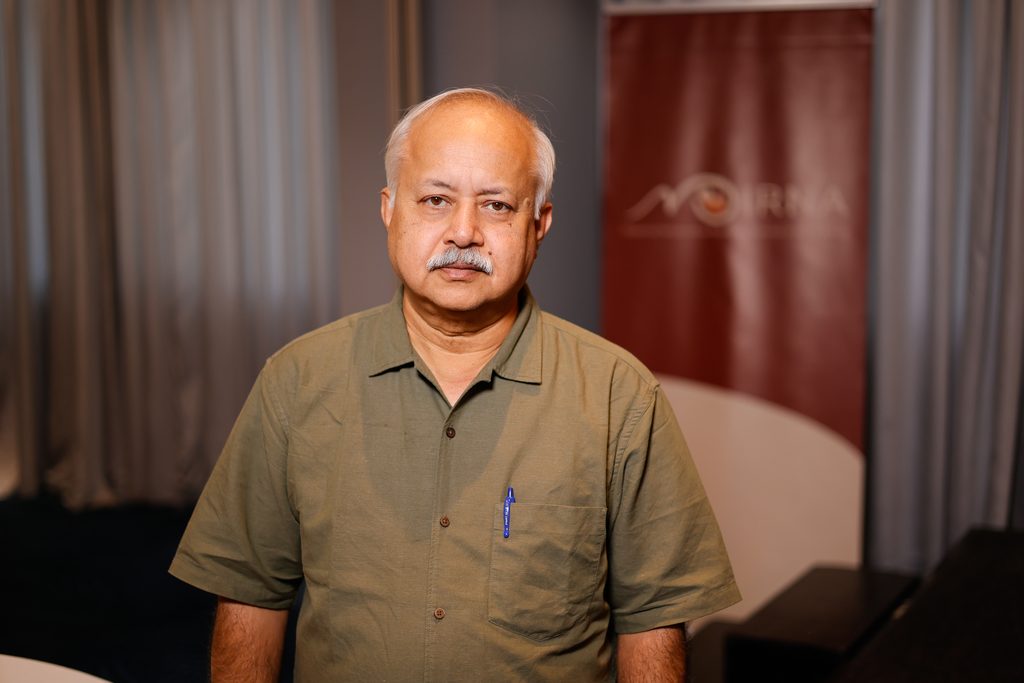
That long vantage point, spanning the country’s earliest experiments in community health delivery to its present-day plateau, gives his reflections particular weight. What he offers is a candid account of a system that succeeded brilliantly at one approach, is now running short of what that approach alone can deliver, and must reinvent itself for the next stage.
An early start that paid off
Bangladesh’s advantage, Dr El Arifeen argues, was timing. The country deployed community health workers decades before the model became global orthodoxy.
“We were early in rolling out our community health workers,” he said. “I think we were one of the very few countries to do so at an early stage, and this goes back to the late 70s and early 80s.”
The head start mattered less as a one-off achievement than as a foundation for continuous learning. “That experience was very helpful, and over the years we have learned from it,” he said. Decades of refining how community-based workers reach families built an institutional muscle memory that newer programmes elsewhere are still trying to develop from scratch.
Two stories, unevenly told
Asked to compare progress on child and newborn health with progress on maternal health, Dr El Arifeen draws a careful distinction. Both have improved substantially, but not at the same pace.
“The story is much more promising for child and newborn health than for maternal health, though we achieved quite a bit of success with both,” he said.
That gap between an exceptional success and a merely good one frames the problem he raises next: momentum is running out.
When the easy gains run dry
Dr El Arifeen is unambiguous about the central challenge Bangladesh now faces. Across the board, progress is slowing.
“The problem right now is that across the whole area, the rates of decline are slowing down,” he said. “So something needs to change as we move along.”
Community-based interventions, the very approach that gave Bangladesh its early lead, have reached the ceiling of what they can achieve alone. “We have done well with community-based interventions, but I think we have probably reached a limit of how much we can squeeze out of that approach on its own,” he said.
Rather than treating community outreach and facility-based care as separate tracks, he says, Bangladesh must join them up. “The time has come for a better integrated set of services, in the community as well as in the facilities,” he said. “We need good referral systems and so on.”
The quiet advantages of density and education
Beyond the health system itself, Dr El Arifeen points to broader social shifts that have underpinned Bangladesh’s gains. Chief among them is education, particularly for girls.
“Our social and development indicators have been improving quite a bit,” he said. “Our female literacy rates are very high. We have invested quite a bit in educating the girls in the country.”
Economic growth has reinforced that progress. One further factor is easy to overlook: population density. With close to 180 million people in a comparatively small country, distance is not the barrier it is elsewhere. “You can walk and reach any place within a few hours,” he said. “I think that has helped as well.”
The traffic analogy
The most memorable moment in his reflection is an analogy for how Bangladesh must now approach its sprawling private health sector, which delivers a substantial share of the country’s maternal care.
He likens it to two models of traffic management. “You can have traffic where you are policing everybody and people are afraid of it, and it probably will work well,” he explained. “Or you can have traffic where most people police themselves. They learn to follow the rules.”
Watching the traffic outside his hotel during the visit, he found the second model already at work. “We saw the same thing, that people do follow traffic rules here,” he said. The lesson, for him, transfers directly to health policy. “Where we have to go with the private sector in Bangladesh is that somehow we have to create the environment where they follow rules.”
The crux, as he frames it, is incentive design rather than enforcement. “Is there an incentive for them to follow rules that is good for them and good for everybody else?” he asked. His answer was blunt: “We’re not there yet.”
The next phase, in his telling, depends on two things Bangladesh has yet to fully build: an integrated system linking community and facility care, and a private sector that follows the rules because doing so serves its own interests. Until that incentive structure exists, he suggests, the slowdown in progress will be hard to reverse.